



LTL Transport
Deliveries are not always time-critical, and a full semi-trailer is not always required. However, cost-effectiveness is invariably a key consideration. To meet these requirements, we offer comprehensive groupage transport services.
Our part-load groupage service involves collecting goods from multiple loading points and distributing them to various recipients. This approach enables optimal utilization of cargo space, efficient route planning, and significant cost reductions. Light commercial vehicles are frequently utilized for groupage transport, which has a positive impact on delivery times.
There is no need to book exclusive use of an entire cargo space. Your part-load shipment will arrive safely at its destination. We specialize in importing groupage freight from EU countries to Poland and also support Polish exporters. The term ‘groupage’ covers a variety of smaller consignments—single
Depending on client requirements and to further reduce costs, we can arrange for the transshipment of groupage goods en route (e.g., from a large 13.6 m truck to smaller delivery vans). This allows for more efficient management of transport resources and often shortens delivery times. Groupage shipments can be delivered to locations where heavy goods vehicles are restricted due to tonnage limits. Upon the client’s request, to minimize the risk of damage or loss during transshipment, the entire transport can be performed by a single vehicle.
We handle orders starting from 100 kg of packaged groupage goods or from one EURO pallet (80×120 cm). If you have a non-standard item to transport, we encourage you to contact us. We provide a tailored approach for each client.
If you are uncertain whether a large truck can access your desired delivery location, please contact us, and we will verify this for you.
What is Groupage Transport?
Groupage transport, also known as Less-Than-Truckload (LTL) shipping, involves the transportation of consignments that are too small in size, varied in shape, or packaging to fill an entire vehicle or container on their own. For this reason, they are combined at transshipment points into a single transport run, allowing a line-haul vehicle to be fully loaded with consolidated freight. In groupage transport, the senders and recipients are geographically dispersed, which makes organization more complex. Furthermore, it requires more time due to the additional handling operations necessary to facilitate this type of transport. The price typically depends on the number of pallets being transported. The client pays for the actual or volumetric weight of the goods, and the vehicle used for transport is selected by the freight forwarder, with its size not affecting the freight rate.
What Characterizes Groupage Cargo?
Groupage cargo, also known as LTL freight, consists of loads with diverse dimensions and properties sent by various clients. These consignments are consolidated by a freight forwarder and subsequently transported as a collective shipment to be delivered to individual recipients. This solution primarily leads to a reduction in warehousing and transport expenses, as the total costs of the route are shared among the individual senders. This form of transport can be described as multi-stop; the driver of a vehicle carrying groupage freight must follow a strictly defined route with multiple delivery points to deliver all shipments to their designated locations on time.
Types of Groupage Cargo
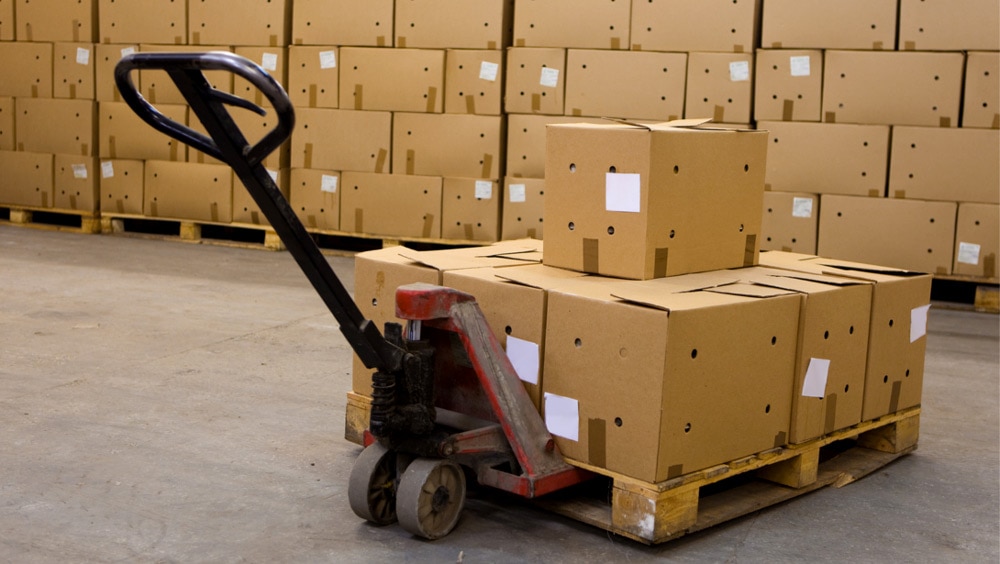
Groupage cargo can be classified into two main types. The first distinction is between packaged cargo (e.g., in cartons, bags, drums, crates, barrels, boxes) and unpackaged goods. More simply, they can be divided into palletized and non-palletized goods.
The Process of Groupage Transport
Preparing Groupage Cargo for Transport
Organizational aspects are crucial in groupage transport. Proper preparation of the cargo plays a particularly significant role. Precision and attention to detail are paramount. Above all, the shipment must be secured to prevent damage during transit. This requires the use of appropriate packaging to protect it from external factors. Cartons, bags, barrels, parcels, and crates are most commonly used for this purpose. It is also important to ensure that the item inside cannot move—it is advisable to use double packaging, bubble wrap, or cardboard inserts. You must also ensure that the packaging will not open during transit.
Marking of Groupage Cargo
Another essential requirement is the proper marking of the shipment.
There are four main groups of markings:
- Identification marks – to identify the goods.
- Informational marks – to provide information about the characteristics of the goods.
- Hazard marks – to indicate characteristics of the cargo that pose a threat to people and the environment.
- Handling marks – to provide instructions on how to handle the cargo.
To ensure the proper preparation of a shipment, a corresponding consignment note must be completed. This document should contain more than just the points of dispatch and delivery. Properly marked and labeled packaging allows for the identification of the transported cargo. It also includes handling instructions, the quantity of goods, and their precise dimensions. This helps to avoid errors at the logistics center and prevent negligence during transport. If proper marking is not ensured, the shipment may be damaged or lose its functional value entirely. Markings are usually placed on the outside of the packaging in a visible location. If the goods are of high value, it is also worthwhile to arrange for insurance before dispatch.
Handling of Groupage Cargo
Parcels Delivered to the Transport Company
Upon arrival at the transport facility, parcels must be weighed and their contents assessed. Subsequently, all shipments are counted and meticulously cataloged. This enables freight forwarders to plan optimal routes for carriers.
Once a transport is assigned, the consolidation phase begins. This involves combining several, or even dozens, of shipments into a single ‘loading unit’. The most common techniques used in groupage consolidation are:
- Strapping – binding several cargo units together.
- Palletization – utilizng pallets for transport
- Unitization – combining small loads into larger packages or units.
- Containerization – packing parcels into containers.
These techniques enable the maximum utilization of cargo space, thereby optimizing transport time and costs. They also facilitate the loading and unloading of goods, which may occur multiple times within a single transport run.
Groupage as a Part Load
The sender prepares the parcel for shipment. Parcels are collected from several loading points from different clients commissioning groupage transport. The vehicle is successively loaded with new shipments, but deliveries may also occur between subsequent loading operations. The vehicle’s route is precisely planned to optimally utilize cargo space, which significantly reduces costs.
For this type of transport order, light commercial vehicles with a payload capacity of less than 24 tonnes (e.g., vans, rigid trucks) are frequently used. The use of these smaller vehicles ensures fast transit and allows access to virtually any location without concern for traffic restrictions. The client does not pay for the entire cargo space, and parcels can be collected relatively quickly, especially with a large transport fleet network. Upon receiving a transport order, the company can contact a driver who is in the vicinity and has the capacity to collect the parcel. It is not uncommon for shipments to be transshipped to optimize the transport route. All these actions are undertaken to optimize the time and cost of shipping the goods.
Goods Excluded from Groupage Transport
Current regulations exclude certain goods from being transported as groupage freight. This applies to shipments whose specific nature requires special transport conditions. These include: live animals, plants, explosives, weapons, oversized goods, goods with a short shelf life, securities, jewelry and pharmaceutical products, as well as certain hazardous materials.
The vehicle transporting the goods must comply with applicable emission standards, and the driver is obliged to be familiar with the regulations of the countries through which they will travel. Do you need to transport any of the aforementioned items that do not qualify for groupage transport? Fill out our transport quote form—we will deliver your goods.
Advantages and Disadvantages of Groupage Transport
Main Advantages:
- Favorable pricing,
- Reduced need for inventory storage,
- Tailored transport solutions,
- Flexibility in selecting delivery dates.
Main Disadvantages:
- Lower efficiency compared to Full Truckload (FTL) transport,
- Sub-optimal utilization of vehicle and warehouse capacity,
- Necessity of first-mile and last-mile transport for small consignments to and from the terminal,
- Requirement for diverse handling equipment and tooling.